Systematic review screening software for titles and abstracts
Import or search citations, rank the queue against your eligibility criteria, and keep human decisions, reviewer conflicts, notes, and exports in one traceable workflow.
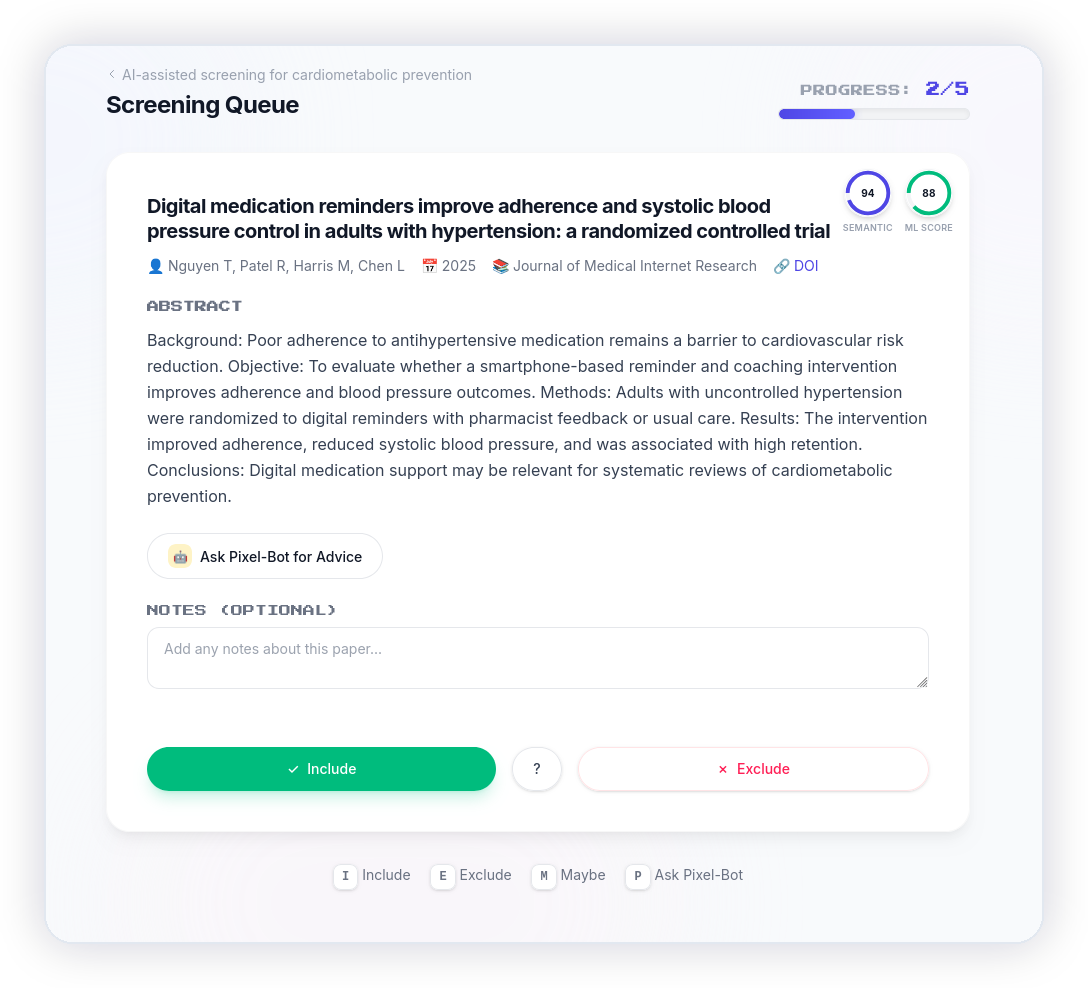
One screening workflow from citation to decision
AI organizes attention; reviewers decide what moves forward.
Bring in citations
Upload RIS, NBIB, BibTeX, CSV, or tagged text, or use the integrated database search.
Prioritize the queue
Rank titles and abstracts against the project question and eligibility criteria from the first session.
Make reviewer decisions
Record Include, Exclude, or Maybe while notes and supporting context remain attached.
Resolve and export
Compare independent decisions, resolve conflicts, and export structured screening records.
What screening software should support
Explicit eligibility criteria
Reviewers need the same operational definitions in view. Lumina stores the research question and inclusion and exclusion criteria with the project.
Human-controlled AI prioritization
A relevance score can change screening order. It should not silently make final eligibility decisions or hide unscreened records.
Blinded dual screening
Two reviewers can assess records independently before decisions are compared and disagreements enter a conflict queue.
Traceable exports
Decision history, reasons, notes, reviewer activity, and review counts remain available for reporting and audit.
What Lumina does not automate
Lumina does not replace protocol design, database-specific search validation, risk-of-bias assessment, methodological judgement, or the reviewer responsible for a final inclusion decision. AI recommendations remain advisory.
Review the AI transparency approach →Screening resources
See the screening workflow before creating a project
Use the public demo to inspect ranked citations, evidence context, and reviewer decisions with sample data.
Open the free demo →